Knowledge Path · 5 books
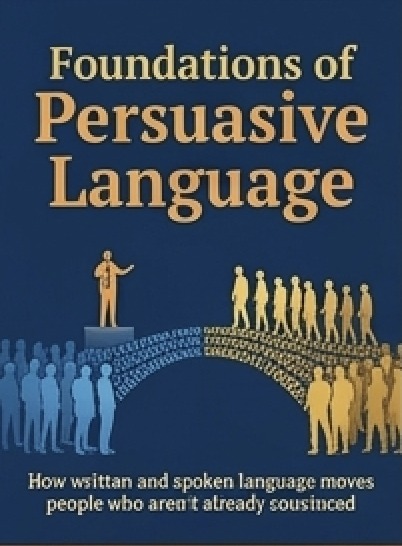
Foundations of Persuasive Language
Strunk claims persuasion starts as hygiene; Demosthenes breaks the rules and wins a vote; Plato calls rhetoric flattery; Aristotle answers that it is a real art; Carnegie sells the art to salesmen. Where this leaves you: whether skill at persuasion is a competence or a liability.
What you'll understandWhat makes a sentence land on someone who isn't already convinced?
Discover
Free previewThe Elements of Style
Strunk claims persuasion starts as hygiene: cut what isn't carrying weight and the sentence does the rest. Question: What does Strunk assume about the reader he's trying to reach?
Understand
The Olynthiac and other public orations of Demosthenes
Demosthenes's real speeches to a hostile assembly — repetitive, ornamented, personal, and it worked. Question: Which of Strunk's rules does Demosthenes break to get the vote?
Included with a free account
Connect
Gorgias
Plato's Gorgias: rhetoric isn't a skill, it's flattery — the knack of seeming to know in front of people who don't. Question: Would Plato's charge stick to Demosthenes, or only to someone worse?
Included with a free account
Go Deeper
Rhetoric
Aristotle answers his teacher: persuasion is a real art with character, feeling, and argument — refusing to learn it doesn't make you honest, just ineffective. Question: Where does Aristotle concede that Plato was right?
Included with a free account
Complete the Path
The Art of Public Speaking
Carnegie & Esenwein's 1915 course teaches what Aristotle systematized, stripped of the ethics and sold to salesmen (~19h 51m). Question: What would Plato say about the business the book is training people to do?
Included with a free account


