5011+ public-domain audiobooks
A world of stories.
Timeless books, free for everyone. Discover and listen to public-domain audiobooks from trusted open collections.
- Always free
- No credit card
- Listen anywhere



Knowledge Paths
Learn a subject in a short audiobook path
Curated five- and six-book sequences you can finish in a weekend—each audiobook about 2–4 hours, ordered like a syllabus you can hear. Free accounts unlock all five foundation paths; future paths come with Plus.
Explore all paths- 5 booksAbout 48 hours
Foundations of Persuasive Language
Strunk claims persuasion starts as hygiene; Demosthenes breaks the rules and wins a vote; Plato calls rhetoric flattery; Aristotle answers that it is a real art; Carnegie sells the art to salesmen. Where this leaves you: whether skill at persuasion is a competence or a liability.
- Discover
- Understand
- Connect
Explore path
- 5 booksAbout 62 hours
Foundations of Reasoning
Aristotle's syllogism, Bacon's attack on it, Locke's degrees of assent, Mill's inductive machinery, and James moving the target to what a belief does. Where this leaves you: whether "justified" is a property a belief has, or a bet that hasn't gone wrong yet.
- Discover
- Understand
- Connect
Explore path
- 5 booksAbout 36 hours
Foundations of Ethics
Epictetus limits what you owe to what you control; Machiavelli treats other people's outcomes as material; Aristotle makes virtue a habit inside a community; Mill sums consequences; Kant says consequences are irrelevant. Where this leaves you: whether morality is something you cultivate, calculate, or are bound by.
- Discover
- Understand
- Connect
Explore path
- 6 booksAbout 48 hours
Foundations of Knowing
Six books on where knowledge comes from and where it stops. Descartes doubts everything. Locke says it all starts with experience. Hume shows how little experience can prove. Kant tries to end the argument.
- Discover
- Understand
- Connect
Explore path
- 5 booksAbout 55 hours
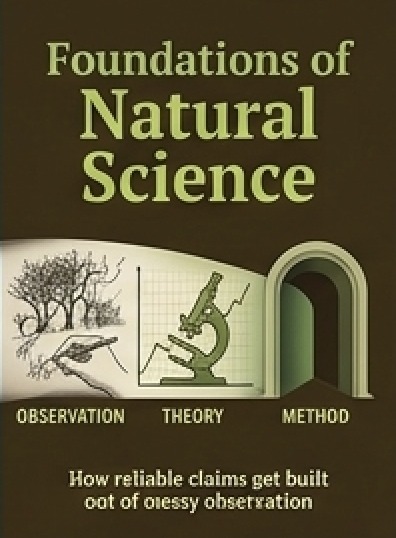
Foundations of Natural Science
How reliable claims get built out of messy observation — a public lecture, a field journal, a theory, a method, and a philosopher asking what any of it proves.
- Discover
- Understand
- Connect
Explore path
- 5 booksAbout 19 hours
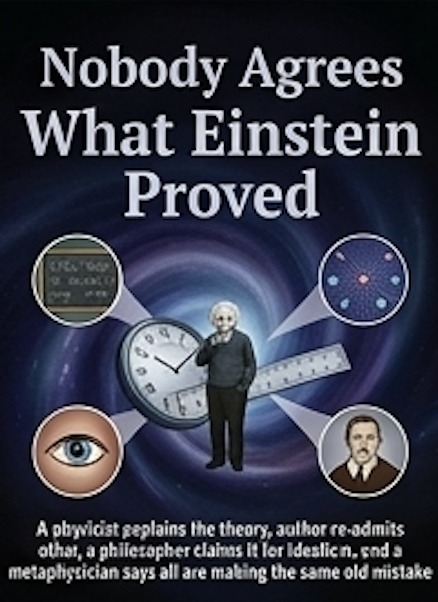
Nobody Agrees What Einstein Proved
A physicist explains the theory, its author quietly re-admits an ether, a philosopher claims it for idealism, and a metaphysician says all of them are still making the same old mistake. Where this leaves you: whether a physical theory can settle a philosophical question, or only relocate it.
- Discover
- Understand
- Connect
Explore path
- 5 booksAbout 41 hours
When People End Up Poor
An aesthete says property deforms the person who owns it, a lawyer says concentrated finance rigs the game, a journalist says the destitution is manufactured, a naturalist says we mis-described human nature, and an evolutionist says helping is the harm. Where this leaves you: whether poverty is a fact about institutions, about human nature, or about neither.
- Discover
- Understand
- Connect
Explore path
- 5 booksAbout 28 hours
What Is a School Supposed to Leave Behind?
Five answers that can't all be right: schooling makes a citizen, teaching is impossible, intelligence is itself a virtue, culture is the best that has been thought, and knowledge is worth nothing beyond itself. Where this leaves you: whether "what is education for" is even a question education can answer about itself.
- Discover
- Understand
- Connect
Explore path
- 5 booksAbout 36 hours
What War Does to the People Who Fight It
A soldier-poet says it destroys them, an analyst says it strips off a lie they were already living, a poet laureate makes a defeat into a saga, a young officer makes a slaughter into an achievement, and a novelist says the enemy was the army itself. Where this leaves you: whether an honest account of a war is possible from inside the institution that fought it.
- Discover
- Understand
- Connect
Explore path
- 5 booksAbout 21 hours
What Is Art For?
An aesthete says nothing, a novelist says whatever holds your attention, a Greek says it discharges an emotion, a socialist says it should argue, and an Italian says all four were describing the wrong object. Where this leaves you: whether "what is art for" is a real question or a category mistake that keeps getting answered.
- Discover
- Understand
- Connect
Explore path
- 5 booksAbout 53 hours
Is History Going Anywhere?
An American says 1914 ended the question, a Cambridge historian says the question was invented in the seventeenth century, a frontier historian says it was a matter of open land, a popularizer tells it to children as a straight line, and a Victorian says it's real and paid for in bodies. Where this leaves you: whether "does history have a direction" is a question about evidence or about what you're willing to count as payment.
- Discover
- Understand
- Connect
Explore path
- 6 booksAbout 41 hours
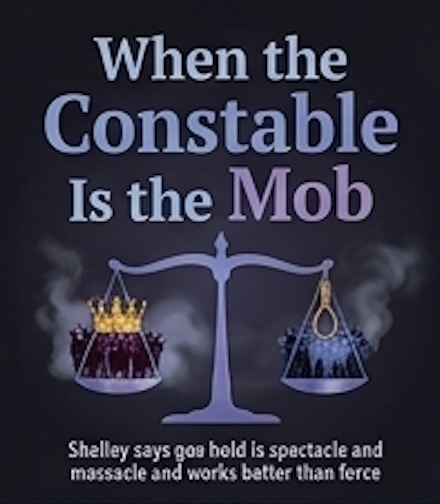
When the Constable Is the Mob
Shelley says a government's hold is spectacle propped up by a massacre; Bagehot says the spectacle is the government and works better than force ever did. Machiavelli, Spooner, Anderson and Berkman each break the tie differently, and none of them the same way. Where this leaves you: if obedience is habit and deference, consent was never the thing holding anyone — but if habit is all there is, nobody here can say what a government owes you.
- Discover
- Understand
- Connect
Explore path
- 6 booksAbout 66 hours
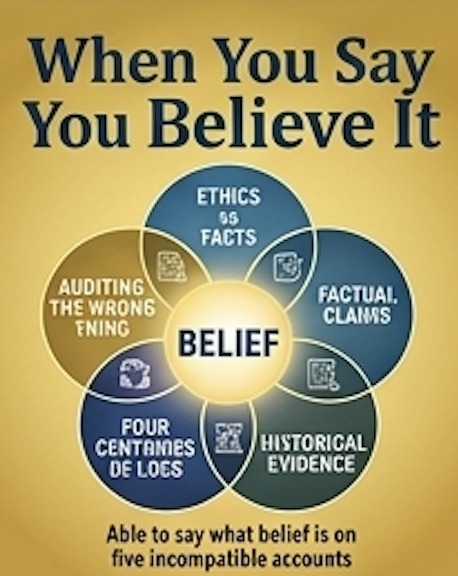
When You Say You Believe It
Russell and Machen agree that a religion's ethics can't outlive its factual claims, and split on which half to throw away. Feuerbach says the claims were never about God in the first place. Glover says they're recoverable by ordinary historical work. White says they've been losing ground for four centuries. James says all five are auditing the wrong thing. Where this leaves you: able to say what belief is on five incompatible accounts — and unable to say which account gets to arbitrate between them.
- Discover
- Understand
- Connect
Explore path
- 5 booksAbout 18 hours
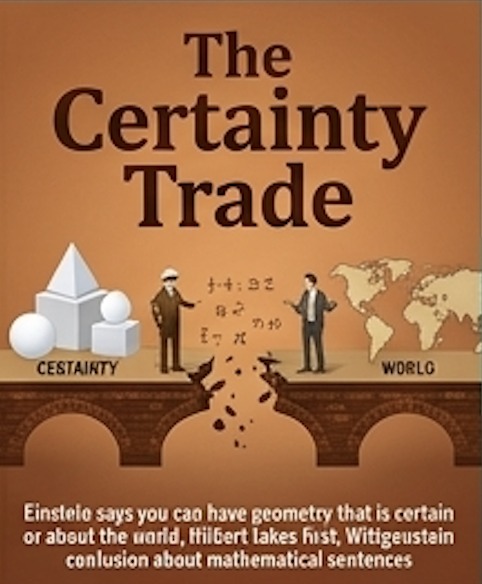
The Certainty Trade
Einstein says you can have a geometry that is certain or one that is about the world, not both. Hilbert takes the first horn and builds an empire on it; Wittgenstein says the whole trade was a confusion about what mathematical sentences do. Where this leaves you: if mathematics asserts nothing, Einstein's dilemma dissolves — and so does any account of why Hilbert's axioms describe the space you walk through.
- Discover
- Understand
- Connect
Explore path
- 5 booksAbout 49 hours
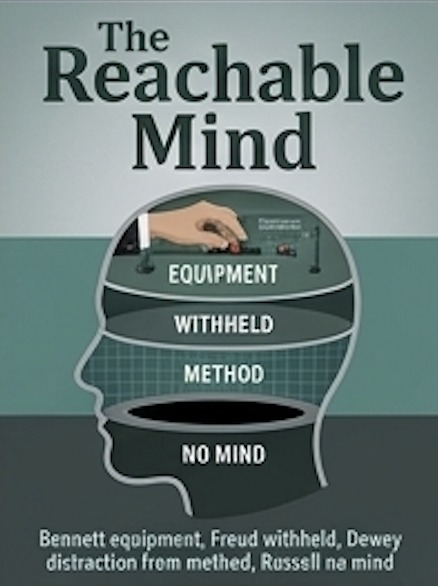
The Reachable Mind
Bennett says your mind is equipment you operate. Freud says the part that decides is deliberately withheld from you. Dewey says the whole question of inner access is a distraction from method. Russell says there is no mind there to reach. Where this leaves you: every rung claims a different thing is the real evidence about a person — report, symptom, test, behavior, or extreme experience — and none of them can be checked by the others' method.
- Discover
- Understand
- Connect
Explore path
Most downloaded
View all