Knowledge Path · 6 books
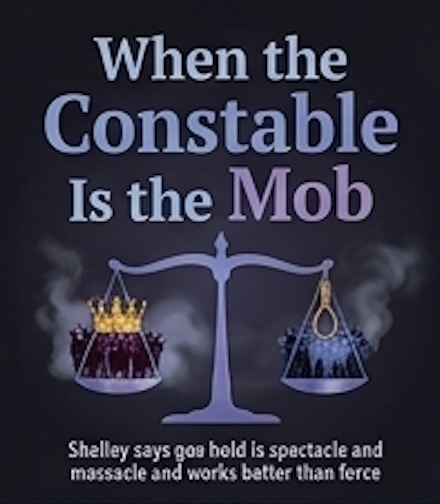
When the Constable Is the Mob
Shelley says a government's hold is spectacle propped up by a massacre; Bagehot says the spectacle is the government and works better than force ever did. Machiavelli, Spooner, Anderson and Berkman each break the tie differently, and none of them the same way. Where this leaves you: if obedience is habit and deference, consent was never the thing holding anyone — but if habit is all there is, nobody here can say what a government owes you.
What you'll understandWhen people go along with a government, what is actually holding them there?
Discover
Free previewMasque of anarchy

After Peterloo, Shelley claims the men who did the killing were the anarchy, and the crowd's answer should be mass refusal. Question: He tells the crowd to stand still and let the sabres come. Why does he think that wins?
Understand
Voice From Harper's Ferry
Anderson, the only Harper's Ferry raider to escape and write it down, answers Shelley's calm refusal with rifles. Question: What does Anderson think the enslaved people around Harper's Ferry actually did, and why does that matter?
Included with AudioShelf Plus
Connect
The Prince
Machiavelli: rule is a technique judged by whether you keep the state — making both prior rungs sentimental. Question: Where does he say a ruler must appear to have a virtue he'd be ruined by actually having?
Included with AudioShelf Plus
Go Deeper
English Constitution
Bagehot: obedience runs on deference to a dignified show, while a fused cabinet does the real work — turning Machiavelli's craft into a sideshow. Question: He calls the theatre necessary rather than shameful. What does he think happens without it?
Included with AudioShelf Plus
Go Deeper
An essay on the trial by jury
Spooner: twelve ordinary jurors may judge the law itself, and no government binds anyone who hasn't personally agreed. Question: On his reading of Magna Carta, who is the last check on a statute — and what does that leave a legislature for?
Included with AudioShelf Plus
Complete the Path
Prison Memoirs of an Anarchist
Berkman shot Frick on rung 2's logic, then spent fourteen years learning the state from inside a cell — and came out convinced the deed was unintelligible to the people it was meant for. Question: What changes his mind — the prison, or the workers?
Included with AudioShelf Plus